The latest chapters, and the next few to follow, go into topics that I feel I have no authority to discuss or explore with great detail. While I do understand that the issues facing the migrant workers in the tomato fields of Florida matter a great deal, such topics are not the focus of this blog. I would rather focus on the plants, and how agriculture and plants affect us and how we live.
That being said, I will give you a short summary of the last few chapters - please keep in mind that what I summarize for you is solely based off of the word of Barry Estabrook in his novel.
The majority of the workers that pick the tomatoes are migrant workers, and many work under slave like conditions. They come from indigenous places and are told of the great wealth they can acquire to come work in the US. They make the trip up - which they must now work to pay off. Rent cost something too, and the food the eat and the showers they take ... and before they know it, they're forever indebted to those that organize the work force. The conditions they live in are horrible, the food provided not sustaining, and the work itself long and extremely difficult. Those leading the work force take no excuses for missing work, and resort to violence and scare tactics to make sure everyone works as hard as possible. Workers are beat and imprisoned if they try to run away or don't show up to work due to illness. Since the growers contract out the farm labour, they're not held liable for whatever happens to the workers - they pay the work leaders, who pay the workers, who control the worker lives through the cycle of owing and paying back.
Eventually, a coalition to support the workers was formed. While it couldn't do anything to hurt the farmers or the labor leaders, the coalition was determined to fight for the rights of the workers and to increase the pay by a penny a pound harvested. Last I left off in the book, the best way to do this was to organize boycotts of the restuarants that used tomatoes picked by these workers - such as Taco Bell.
In the next few chapters, we'll hopefully get an idea of how successful the campaign was, and if similar conditions still exist today. So far, it seems like not much has changed since - migrant workers in Florida are a modern day case of slavery that no one seems to notice or care about.
October 11, 2011

October 8, 2011
Tomatoland Chapters Two and Three: Chemicals.
Pesticides are used for a wide range of functions: herbicides kill weeds, insecticides kill insects, fungicides kill fungus, and so on. The pesticide industry is highly regulated - it takes over ten years to bring a pesticide to market due to years of testing and legalities. When you purchase a pesticide, you sign into following the pesticide label word for word as a legal document. Each pesticide label describes exact procedures for applications (how and when), what protective equipment the applicator should wear, how close to harvest the pesticide can be applied, how long you must stay out of the field after the application, and so on. Not following these instructions can land the grower heavy fines and legal action - it's serious business because pesticides are serious chemicals.
There are several explanations of why we actually need chemicals to help grow crops. Insects, bacteria, nematodes, and fungus like to eat what we provide. Insects can damage the beauty of the fruit, spread disease plant to plant, tear apart leaves, and so on. Right now, Napa is on high alert for the European Grapevine Moth, which causes damage by the larvae climbing into the fruit and hollowing out the berries. If in high enough numbers, a grower can lose all of the fruit. Bacteria can cause a whole host of disease that can reduce yield and kill plants full outright - such as phytopthera, the bacteria responsible for causing the Irish potato famine in the 1800s. Fungus can do the same to plants, and some of our worst diseases are fungal based. If we were not able to control the variety of diseases and insect pests that exist through chemicals, then we would have a difficult time growing as much food as we do the world over.
The problem is that sometimes chemicals are used in excess, and the pesticides tend to be toxic to humans. While precautions are made to prevent produce from making it to market with toxic levels of pesticides, the same cannot be said of those working in the fields, the focus of Chapters two and three.
Tomatoes shouldn't be grown in Florida. Florida is hot and humid, and while tomatoes like the heat, the humidity does the plants no special favor since humid conditions are prime conditions for fungal and bacterial diseases. Some plants can withstand this humidity, but not tomatoes. Tomatoes grow best where it's dry and hot, like California. Because of this, Florida uses a lot of pesticides to combat diseases. And while the tomatoes that make it to your plate shouldn't, and don't, reflect the amount of pesticides applied in the field, the same cannot be said of field conditions, the main argument of Mr. Estabrook. Apparently, growers in Florida don't follow the rules of the labels, and spray whenever and wherever with great harm to the migrant workers. I don't know much about policies regarding immigration and farm labor, but if Mr. Estabrook is correct then the workers in Florida tomato fields are regularly exposed to a whole host of extremely toxic chemicals, paying the price through terrible health conditions.
Of focus in the book, methyl bromide is used to kill anything and everything in the soil before planting. Fields are covered in plastic, and the chemical is injected via gas into the soil. It's used in Florida on tomatoes and closer to home on strawberries throughout California. Not only is this chemical toxic to humans, but is bad for the ozone. The chemical was federally banned years ago, but some vegetables like Florida tomatoes and California strawberries have special exemptions. Why? There are no good alternatives for these specific crops. In Florida, there is no other way to get rid of nematodes (soil born microscopic worms) that decimate tomato fields. In California, no pesticides can kill off the plethora of fungal and bacterial diseases that drastically reduce crop yield and quality in strawberries. Scientists are working as hard as they can to find some other method - several of them have been my peers and colleagues these last few years at UC Davis. But no good alternatives exist right now, no matter what Mr. Estabrook says. He states that there is only a 10% profit difference between using and not using methyl bromide in some crops studied in California - but that's a lot when you're working with big numbers. It's enough to make growers not even bother growing the crop. The thing is, there are relatively safe ways to use methyl bromide to prevent any human harm (though the same cannot be said about the ozone layer). In Florida tomato fields, they don't do these things.
There are several things we can do to avoid using toxic chemicals in such high quantities, but it takes a change in the system and using smarter techniques - a topic for another blog post. For the time being, keep this in mind - agricultural chemicals have allowed us to provide for the world in ways never before possible. However, if pesticide usage is not managed properly and if pesticides are used as a first resort against pests, then the price is paid through environmental damage, human harm, and pest resistance. Pesticides provide us with perfect looking, cheap produce - would we be willing to pay more for produce that doesn't look as pretty, but uses less pesticides? While we can't change the system to give you that choice now, you can always eat locally grown and in season tomatoes - a step in the right direction.
There are people who are devoting a lot of time and energy to finding a better way to do things, and growers who use methods that use less chemicals - but these are not the growers providing you with year-round tomatoes. Stay tuned for more from Tomatoland, and more on pesticides that make it to the plate.
There are several explanations of why we actually need chemicals to help grow crops. Insects, bacteria, nematodes, and fungus like to eat what we provide. Insects can damage the beauty of the fruit, spread disease plant to plant, tear apart leaves, and so on. Right now, Napa is on high alert for the European Grapevine Moth, which causes damage by the larvae climbing into the fruit and hollowing out the berries. If in high enough numbers, a grower can lose all of the fruit. Bacteria can cause a whole host of disease that can reduce yield and kill plants full outright - such as phytopthera, the bacteria responsible for causing the Irish potato famine in the 1800s. Fungus can do the same to plants, and some of our worst diseases are fungal based. If we were not able to control the variety of diseases and insect pests that exist through chemicals, then we would have a difficult time growing as much food as we do the world over.
The problem is that sometimes chemicals are used in excess, and the pesticides tend to be toxic to humans. While precautions are made to prevent produce from making it to market with toxic levels of pesticides, the same cannot be said of those working in the fields, the focus of Chapters two and three.
Tomatoes shouldn't be grown in Florida. Florida is hot and humid, and while tomatoes like the heat, the humidity does the plants no special favor since humid conditions are prime conditions for fungal and bacterial diseases. Some plants can withstand this humidity, but not tomatoes. Tomatoes grow best where it's dry and hot, like California. Because of this, Florida uses a lot of pesticides to combat diseases. And while the tomatoes that make it to your plate shouldn't, and don't, reflect the amount of pesticides applied in the field, the same cannot be said of field conditions, the main argument of Mr. Estabrook. Apparently, growers in Florida don't follow the rules of the labels, and spray whenever and wherever with great harm to the migrant workers. I don't know much about policies regarding immigration and farm labor, but if Mr. Estabrook is correct then the workers in Florida tomato fields are regularly exposed to a whole host of extremely toxic chemicals, paying the price through terrible health conditions.
Of focus in the book, methyl bromide is used to kill anything and everything in the soil before planting. Fields are covered in plastic, and the chemical is injected via gas into the soil. It's used in Florida on tomatoes and closer to home on strawberries throughout California. Not only is this chemical toxic to humans, but is bad for the ozone. The chemical was federally banned years ago, but some vegetables like Florida tomatoes and California strawberries have special exemptions. Why? There are no good alternatives for these specific crops. In Florida, there is no other way to get rid of nematodes (soil born microscopic worms) that decimate tomato fields. In California, no pesticides can kill off the plethora of fungal and bacterial diseases that drastically reduce crop yield and quality in strawberries. Scientists are working as hard as they can to find some other method - several of them have been my peers and colleagues these last few years at UC Davis. But no good alternatives exist right now, no matter what Mr. Estabrook says. He states that there is only a 10% profit difference between using and not using methyl bromide in some crops studied in California - but that's a lot when you're working with big numbers. It's enough to make growers not even bother growing the crop. The thing is, there are relatively safe ways to use methyl bromide to prevent any human harm (though the same cannot be said about the ozone layer). In Florida tomato fields, they don't do these things.
There are several things we can do to avoid using toxic chemicals in such high quantities, but it takes a change in the system and using smarter techniques - a topic for another blog post. For the time being, keep this in mind - agricultural chemicals have allowed us to provide for the world in ways never before possible. However, if pesticide usage is not managed properly and if pesticides are used as a first resort against pests, then the price is paid through environmental damage, human harm, and pest resistance. Pesticides provide us with perfect looking, cheap produce - would we be willing to pay more for produce that doesn't look as pretty, but uses less pesticides? While we can't change the system to give you that choice now, you can always eat locally grown and in season tomatoes - a step in the right direction.
There are people who are devoting a lot of time and energy to finding a better way to do things, and growers who use methods that use less chemicals - but these are not the growers providing you with year-round tomatoes. Stay tuned for more from Tomatoland, and more on pesticides that make it to the plate.
October 4, 2011
Tomatoland Chapter One: The Importance of Genetic Diversity
The first chapter of Tomatoland is spent at my alma mater, the University of California Davis. UC Davis is home to the C.M. Rick Tomato Genetic Resource Center, a living seed bank on campus. Seed is stored and shared as plants are actively collected from around the world and then regenerated in campus greenhouses for scientific purposes. I've spent the last three years becoming involved with the preservation of genetic diversity through my place of work, the National Clonal Germplasm Repository (NCGR) at UC Davis. The NCGR is like a living seed bank except that all of our stock is actually living, and sharing occurs through dormant cuttings. Since the cuttings are the same material as the trees they come from, this is considered clonal propagation.
[Educational aside: When a plant shuts down for the winter, it is considered dormant. At this point, you can cut off portions of the woody plant and then re-grow the plant from this cutting. Not all plants do this as well as others. Grapes and figs are really easy to propagate - you can practically stick a dormant cutting in a fresh pot of soil and get a whole new plant. For most stone fruit (peaches, plums, apricots - found in the Prunus family) propagation is more difficult, and most people bud. The growing point on a plant is at the bud, like the 'eyes' on the potato. On dormant wood, you can carefully cut this portion out then attach it to a living plant of the same family. Attaching involves several different techniques, and you have to be somewhat scientific about it, but it's rather neat that you can do this. If you're inclined to be crafty, you can bud several different kinds of peaches onto one peach tree, or different apples on one apple tree, and end up with a bouquet of different fruit all on the same tree.]
The experimental orchards owned and maintained by the NCGR are absolutely amazing. Our mission is to keep and maintain any and all varieties and cultivars of trees and vines that grow well in Mediterranean climates. We have thousands of different kinds of grapes, hundreds upon hundreds of various pomegranates, tons of mulberries, kiwis, figs, pistachios, walnuts, persimmons, peaches, plums, apricots, cherries and so on. The grapes make up the biggest part of our collection, and I spent an entire summer attempting to take physical data on all of our table and wine grapes that make up 1,300 plants of the collection alone (and they're all cultivars from the same family and species, Vitis vinifera). The diversity of the collection is amazing - if you walk through the vineyards, you'll taste grapes that have a distinctive concord flavor, ones that are purely Muscat, some that taste like nothing, others with floral tones, some that are just sweet, others that are more musky - and that's just flavor. Some grapes grow up, others down, some with big leaves, others with small, fuzzy backs and still others that are nice and smooth - and all of this variety is found within the same species. Wine thrives off of the diversity with different kinds of grapes getting different wine varieties: pinot noir, chardonnay, zinfandel, etc - all different cultivars of grapes, all with different growing requirements and habits. It's truly amazing.
 When you go to the grocery store, usually you can buy two types of grapes: white and red. It's a shame that our current agricultural techniques do not provide for the variety available by the species of Vinefera, but that is a topic for another discussion. I'm more interested, as is author of Tomatoland Barry Estabrook, in why diversity matters. All of the various cultivars and varieties of these different plants provide unlimited genetic potential. Not only do these different plants taste and grow differently, but they all have different resistances to terrible plant diseases. It's possible to breed resistance to certain diseases into more popularly grown varieties, and thus prevent over-usage of pesticides and better, stronger plants. I am currently a part of a project that is trying to find resistance of crown gall, a bacterial disease that causes big galls on the crown of walnut plants, reducing production and causing eventual tree death. In this project, we are inoculating all varieties available at the NCGR in hopes that a handful won't be affected by the bacteria, and will therefore have genetic material to breed into popular walnut varieties.
It's important to keep and maintain as much genetic diversity as possible to provide for resistance of known, and future unknown, diseases. We owe much of our ability to grow plants all over the world to this goal of science. The potential of this diversity does not stop at disease resistance - scientists are attempting to improve the nutritional content, drought resistance, and production output of many of the fruits and vegetables we eat on a daily basis through the usage of weird and wild related plants out of cultivation.
 While at work today, I took a handful of pictures to display the variety in grape leaves around the greenhouses. I really enjoy the diversity of our collections, and I hope you can enjoy how different all of these leaves look while still being a part of the same family (and relations). It's sort of like the human species - we're not at all alike to one another but we all are considered humans. I'm sure you'd be bummed if you only could find varieties of me for friendship around the world, just as I'm bummed you can only find one kind of grape at the grocery store. C'est la vie!
[Educational aside: When a plant shuts down for the winter, it is considered dormant. At this point, you can cut off portions of the woody plant and then re-grow the plant from this cutting. Not all plants do this as well as others. Grapes and figs are really easy to propagate - you can practically stick a dormant cutting in a fresh pot of soil and get a whole new plant. For most stone fruit (peaches, plums, apricots - found in the Prunus family) propagation is more difficult, and most people bud. The growing point on a plant is at the bud, like the 'eyes' on the potato. On dormant wood, you can carefully cut this portion out then attach it to a living plant of the same family. Attaching involves several different techniques, and you have to be somewhat scientific about it, but it's rather neat that you can do this. If you're inclined to be crafty, you can bud several different kinds of peaches onto one peach tree, or different apples on one apple tree, and end up with a bouquet of different fruit all on the same tree.]
The experimental orchards owned and maintained by the NCGR are absolutely amazing. Our mission is to keep and maintain any and all varieties and cultivars of trees and vines that grow well in Mediterranean climates. We have thousands of different kinds of grapes, hundreds upon hundreds of various pomegranates, tons of mulberries, kiwis, figs, pistachios, walnuts, persimmons, peaches, plums, apricots, cherries and so on. The grapes make up the biggest part of our collection, and I spent an entire summer attempting to take physical data on all of our table and wine grapes that make up 1,300 plants of the collection alone (and they're all cultivars from the same family and species, Vitis vinifera). The diversity of the collection is amazing - if you walk through the vineyards, you'll taste grapes that have a distinctive concord flavor, ones that are purely Muscat, some that taste like nothing, others with floral tones, some that are just sweet, others that are more musky - and that's just flavor. Some grapes grow up, others down, some with big leaves, others with small, fuzzy backs and still others that are nice and smooth - and all of this variety is found within the same species. Wine thrives off of the diversity with different kinds of grapes getting different wine varieties: pinot noir, chardonnay, zinfandel, etc - all different cultivars of grapes, all with different growing requirements and habits. It's truly amazing.
 When you go to the grocery store, usually you can buy two types of grapes: white and red. It's a shame that our current agricultural techniques do not provide for the variety available by the species of Vinefera, but that is a topic for another discussion. I'm more interested, as is author of Tomatoland Barry Estabrook, in why diversity matters. All of the various cultivars and varieties of these different plants provide unlimited genetic potential. Not only do these different plants taste and grow differently, but they all have different resistances to terrible plant diseases. It's possible to breed resistance to certain diseases into more popularly grown varieties, and thus prevent over-usage of pesticides and better, stronger plants. I am currently a part of a project that is trying to find resistance of crown gall, a bacterial disease that causes big galls on the crown of walnut plants, reducing production and causing eventual tree death. In this project, we are inoculating all varieties available at the NCGR in hopes that a handful won't be affected by the bacteria, and will therefore have genetic material to breed into popular walnut varieties.
It's important to keep and maintain as much genetic diversity as possible to provide for resistance of known, and future unknown, diseases. We owe much of our ability to grow plants all over the world to this goal of science. The potential of this diversity does not stop at disease resistance - scientists are attempting to improve the nutritional content, drought resistance, and production output of many of the fruits and vegetables we eat on a daily basis through the usage of weird and wild related plants out of cultivation.
 While at work today, I took a handful of pictures to display the variety in grape leaves around the greenhouses. I really enjoy the diversity of our collections, and I hope you can enjoy how different all of these leaves look while still being a part of the same family (and relations). It's sort of like the human species - we're not at all alike to one another but we all are considered humans. I'm sure you'd be bummed if you only could find varieties of me for friendship around the world, just as I'm bummed you can only find one kind of grape at the grocery store. C'est la vie!
 |
| Red and fuzzy! |
 |
| Not only does this leaf have multiple leaflets, but it's shiny. |
 |
| I like the seperations on this leaf. |
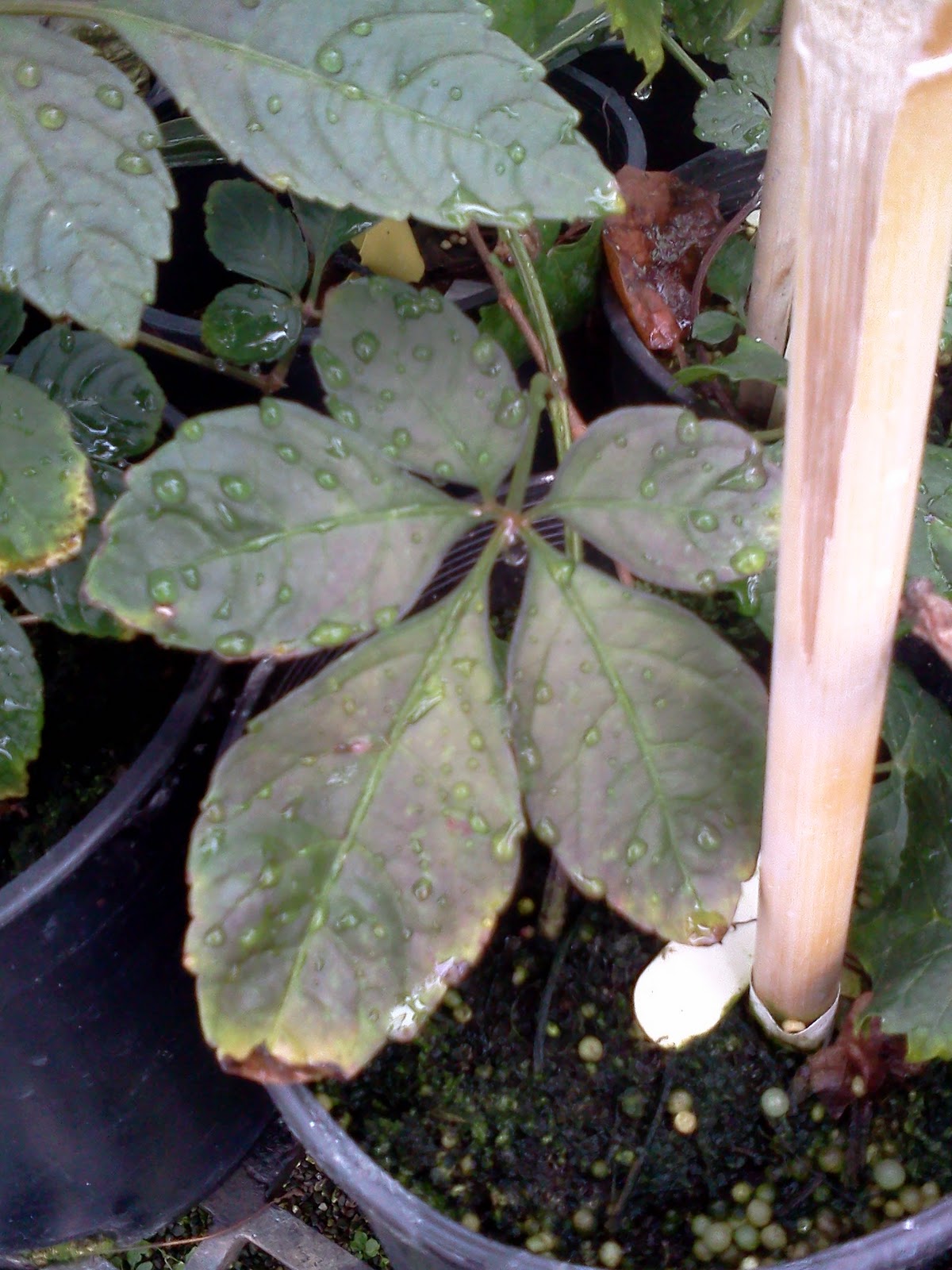 |
| cool eh? |
October 2, 2011
Tomatoland: Intro.

I told my fellow horticultural friends of this book and was warned that it's a bit of a 'chicken little' of conventional farming. I don't know if this will be the case but the warning was well deserved - it is important to be a critical reader and observer. So, while I read this book and review it for this blog, I'll make sure to keep my mind both open and critical. I'm a trained horticulturalist and so I will focus most on understanding and discussing the horticulture and agronomy aspects - I can say little on the validity of slavery claims.
Where I live, we grow a lot of canning tomatoes - Sacramento is referred to as "Sactomento" because of this. The central valley in California is great for tomatoes because of hot and dry summers. And luckily for me, friends, co-workers, and local farming operations all grow and provide fantastic and flavorful tomatoes. This book talks about a completely different beast of tomatoes, one that doesn't compare to what I've made into a couple gallons of tomato soup and sauce today - year round grocery store tomatoes. Stay tuned for the synopsis!
September 29, 2011
Organic pesticides - don't drink.
Today, Andrew Williamson Fresh Produce voluntarily recalled their organic grape tomatoes due to possible Salmonella contamination. Samples from the Michigan processing plant tested positive for the bacteria, but no public illnesses have been reported in connection to these tomatoes.
Why does this matter?
I’m going to be upfront with you and just get this out of the way: I don’t believe in organic fruits and vegetables. This doesn’t mean I like to eat things with pesticides, but I don’t like the marketing scam that ‘organic’ has become. The public has been lulled into spending more on products that they think are safe and better for them, but may not actually be. Those Fresh & Easy organic grape tomatoes just purchased from Whole Foods are organic and are just as likely to become contaminated.

Here’s the main problem I have with organically produced products and the public perception: organic doesn’t mean that it’s pesticide-free or chemical-free. It just means that the pesticides must be from organic sources. For example, pyrethrin is a commonly used pesticide derived from chrysanthemum flowers. Applied as a powder, once the insect ingests the chemical it will die from complications in the nervous system. In low doses, it’s virtually non-toxic to humans – but an overdose in pets or people can cause a whole bunch of uncomfortable side affects. Furthermore, pyrethrins don’t discriminate between what insects are killed – so while a nasty pest may be terminated, the poor little honeybee is also victim of the chemical’s deadly affects.
As an intro, keep this in mind: organic fruits and vegetables are not pesticide-free and chemical-free. It simply means that the pesticides must be from organic sources. Organic pesticides tend to be better for the environment because they don’t persist in the environment and they aren’t as toxic to humans and mammals – but they can still harm humans, kill honeybees, and do terrible things to waterways.
There’s a lot to say about organics and how agribusiness has completely changed the concept that most people understand organic to be. What do I wish organic still was? Minimal, if any, chemical input and farming with sustainable practices. Stay tuned.
September 28, 2011
Old Apples.
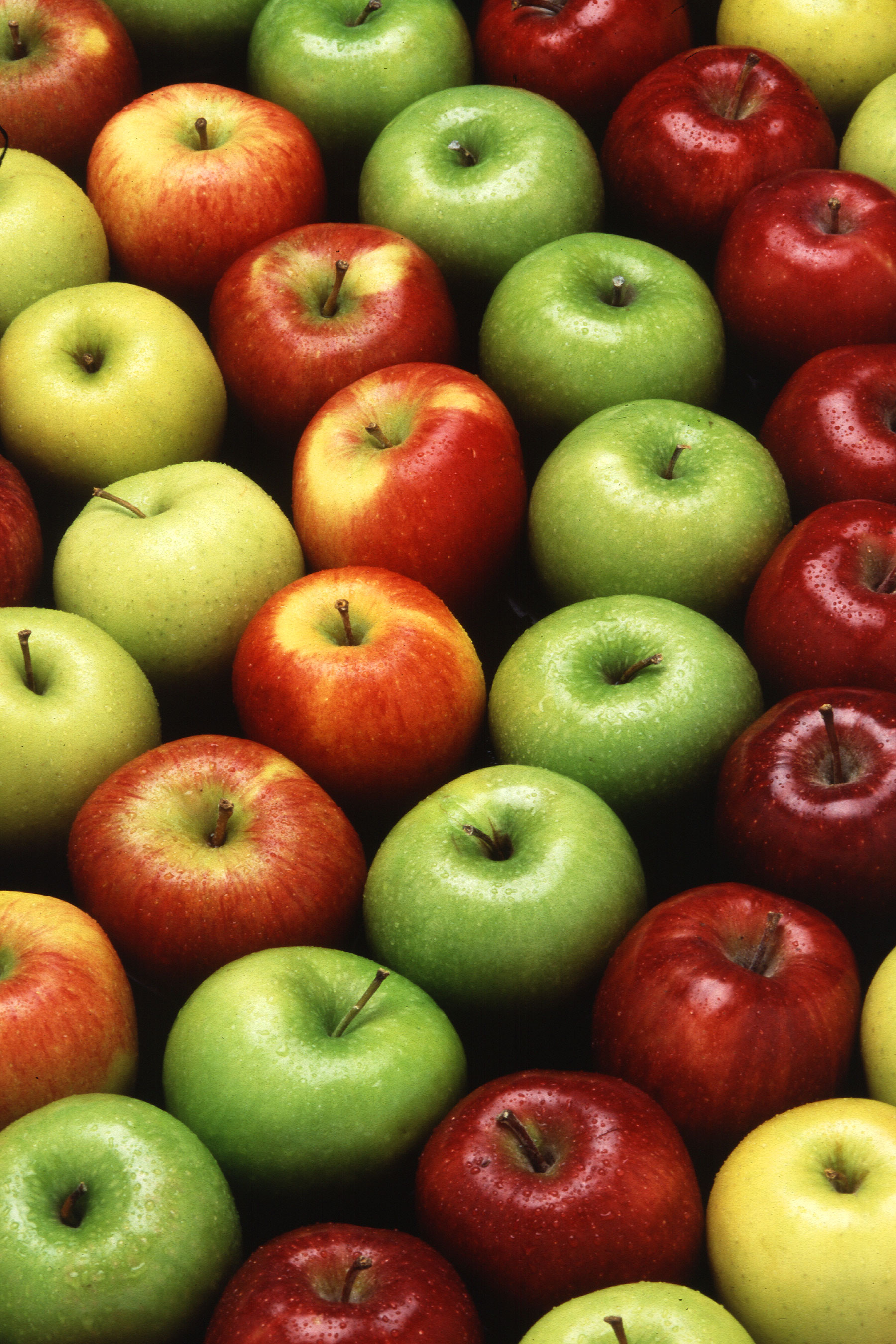
Apples are available year-round in most grocery stores, even though apples come into season once a year. In the United States, apples are ripe and ready for picking in the late summer and throughout the fall depending on where you get your apples. So how is it that you can buy apples in the spring and summer, before even the bees have had their way with apple blossoms? Cold storage!
Apples naturally produce ethylene, a plant hormone that stimulates and regulates the ripening of fruit. In the world of post harvest technology, ethylene is a wonder gas because of this feature - one can manipulate when a fruit ripens by introducing ethylene gases or hindering natural ethylene production. When it comes to apples, the fruit will continue to ripen off of the tree through natural ethylene production, so this process must be stopped in order to store apples for long periods of time. Because apples produce such little ethylene compared to bananas or citrus, this isn’t that difficult to do. Apples can be stored for up to a year depending on the variety in carefully controlled storage facilities. These facilities use high concentrations of carbon dioxide, nitrogen and oxygen gases to reduce the build up of ethylene, and thus stop the apples from ripening.
What does this do to the fruit? Growers like to believe that it does little other than provide a year-round supply of apples. But have you ever eaten an apple and found the inner texture slightly grainy? Or even seen slightly browned flesh next to the core without evidence of bruising on the outside? These are ‘diseases symptoms’ of long-term apple storage, and science is doing what it can to try to prevent these ‘problems’ from occurring. In this case, growing organic apples is not the answer because organic and conventionally farmed apples alike will exhibit the same symptoms.
Apples are fantastic because they do last a long time off the tree. If placed in cold storage, they’re bound to last several weeks. We’ve eaten apples for centuries because we learned to store them properly, and there is no reason we shouldn’t continue to keep apples around as long as possible. The problem occurs when we expect to have perfectly luscious apples many, many months after harvest. Now, if you don’t mind a grainy, flavorless apple any time of year then don’t worry about it. But if you do want a better apple, keep in mind that fruits and vegetables always taste best when they’re in season. Apples are in season now – not in the spring – so enjoy them while they’re tasty. Even better, purchase apples from local growers at the farmers market - they’re much less likely to have been stored and saved from last years harvest this way.
September 26, 2011
Governing your potatoes.
I recently converted to Google News, where you can hand pick and easily organize your news. It’s fantastic, and allows me to congregate any news I can find on agriculture all in one place. Today, the top stories are that the USDA wants to take potatoes out of school lunches, puréed pork and ground beef have been recalled, and food stamp users don’t have any income. It takes a few stories to see agriculture related headlines: Alabama’s commissioner is promoting free trade, Michigan is supporting new dairy programs, Minnesota should export more, and dry weather in Nebraska is allowing early harvesting.
Agriculture equates to food for a lot of people, and understanding food on the level of what we should and shouldn’t be eating: we shouldn’t be allowing children to eat so many potatoes and we shouldn’t be eating tainted meat. But potatoes aren’t really all that bad if they don’t come breaded and fried. Potatoes have plenty of vitamins, minerals, and phytochemicals stored inside which can help fight disease, maintain healthy blood pressure, and if baked only cost around 161 calories. That’s not so bad. The Huffington Post article goes over the political fight regarding funding of USDA guidelines limiting potatoes and it’s starchy friends while favoring other nutritious options in school meals. On the opposite side, senator Susan Collins of Maine’s potato country with Colorado’s potato growing Senator Mark Udall are worried about the loss to their farmers. Politics. Isn’t it interesting that the factors affecting how we feed our children in schools comes down to politics?
This is how we understand agriculture – politics and the food that ends up on your plate based upon those policies. It explains why we only eat white potatoes. The grocery store allows your pick between russets, Yukon gold, or red potatoes and maybe fingerlings if you’re looking. But potatoes come in all shapes and colors with varying nutritional values and tastes depending on the variety. In fact, Seed Savers Exchange (who saves and shares heirloom varieties of vegetables) lists sixteen different varieties for purchase in it’s catalogue – long, skinny ‘Purple Peruvian’, chubby ‘German Butterball’, and a completely brown flesh ‘All Blue’ variety. If you want a potato for soups, grow ‘Carola’. If salad is your thing, try the ‘Rose Finn Apple.’ And if you just want great yield with an overall great taste, then order the ‘Carible’. But it doesn’t end there, as Seed Savers Exchange has over 650 named varieties of potatoes with over 657 available through its network of fellow seed savers. That’s amazing. So how is it that you have so few choices at the grocery store? We’ll get to that when I explore fruit.
Subscribe to:
Posts (Atom)